|
|||
What's the Difference?Troy Schwensen The following is an extract from the March 09 Issue of The Global Speculator sent to subscribers on the 17th March 2009. 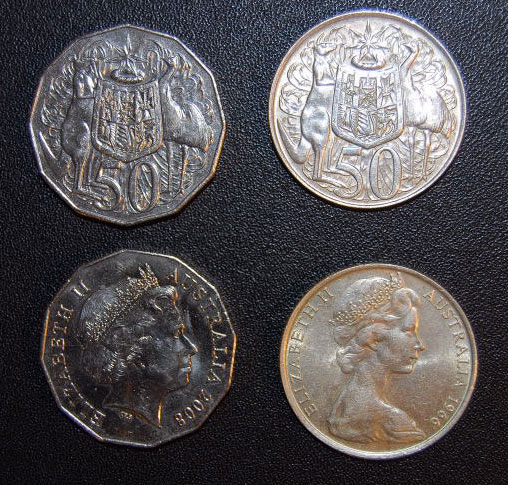 Take a look at these two Australian 50c pieces and tell me if you can spot the difference. The aesthetic difference is fairly obvious. One is round while the other is 12 sided. Aside from this they are both silver in color, they appear to have the same emblems and they both have "Queen Elizabeth the Second" on one side (all be it a younger version on the 1966 piece). If you were to take both coins to the shops here in Australia they are both legal tender and would each buy you 50c worth of goods. One difference less obvious is the 1966 50c round is 80% silver and 20% copper, where as the 12 sided 50c piece is copper/nickel based. Subsequent changes in the silver price saw the 1966 50c silver round discontinued in 1967, replaced by its 12 sided successor. It was the last coin with precious metals content placed into circulation. Each silver round has roughly 1/3 of an oz of silver and when I last looked on EBAY, you could buy or sell one for between A$7.50 and A$8.50 a coin (roughly its silver content). There are very few better examples of how precious metals preserve purchasing power than by comparing what these two coins of the same face value can buy you today versus 1966, when the Silver round was minted. Back in 1966 each coin would have purchased roughly:
Today the 12 sided 50c piece will buy:
The 1966 50c silver round sold on EBAY for conservatively A$7.00 (silver price A$20-21/oz) buys:
One of the biggest deceptions with inflation is that for the most part it tends to occur gradually with very few people bothered by the diminishing purchasing power of their money. If you are of retirement age and have savings in the bank earning you interest, chances are today's miserly rates are not protecting you against inflation (this is a global problem). As our western governments recklessly deficit spend via borrowing and monetize debt to keep interest rates low, they are accelerating this inflationary process and effectively negating the benefits of citizens who have started to instinctively save again. When governments borrow to spend, make no mistake we the citizens pay. The future interest and principal repayments will come from future taxes. If the government monetizes debt and effectively prints money, we pay via the accelerated decimation of the purchasing power of money (inflation). The question you need to ask is what checks are in place to ensure government does not abuse its money printing privileges (very tempting in today's troubled times). When the gold standard was abolished back in 1971 and replaced by a floating exchange rate system, the last of these checks was effectively withdrawn. The French demanded gold in exchange for the mounting US dollars they were accumulating. They were fully within their rights to do so. The US government under Nixon reneged on this agreement and the rest as they say is history. For anyone interested I write a free monthly newsletter on the precious metals markets. This includes technical analysis as well as company updates on many of the prominent precious metals companies around the world. Past articles and newsletters can be accessed in the archive section. Pay us a visit at the website below. Troy Schwensen CPA Troy Schwensen
is a full time investor/Trader who spent 8 years in the Accounting
and Finance industry which included roles with blue chip Australian
companies such as Goodman Fielder and Fosters where he spent three
years as a Senior Business Analyst. He made a decision to leave
this industry in 2002 after discovering a long term opportunity
to invest and trade in the precious metals market where he has
since used his analytical skills to build a sound working knowledge
of the sector and its comprising companies. 321gold Ltd |