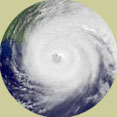
 In The
Eye of The Storm In The
Eye of The Storm
John Browne
Sep 4, 2008
As we enter the height of the
hurricane season, it may be worthwhile to recall, when considering
the economy at large, the particular deception that lurks in
the "eye" of the storm. After a raging tempest, the
sudden appearance of the calm 'eye' can all too easily encourage
people to leave their shelter in order to assess and even repair
damage, exposing themselves to the often more devastating second
leg of the hurricane.
We have long warned our readers of a coming real estate crash
which would then lead to a credit crunch, and eventually a major
round of bank failures. We have argued that these developments
would be the precursors to a major recession, and perhaps a depression.
As predicted, the collapsing
values of bonds backed by subprime mortgages did indeed lead
to a collapse of the entire mortgage market, a bank liquidity
crisis, a credit crunch and a steep fall in consumer confidence.
This was the first leg of the storm, but the full blown banking
collapse and the deep recession are not yet manifest. The conventional
wisdom holds that the bullet has been dodged.
The markets are buying this hypothesis. Tempted by the latest
crop of economic data that seems to show expansion, U.S. stocks
have moved sideways, and even climbed slowly. The U.S. dollar
has risen from its lows, and the rate of bank failures appears
to be under control. In short, with gold off almost twenty percent
from its highs, it looks as if many investors have concluded
that the worst of the storm has past, and have decided look for
good deals amid the stock market wreckage. Proceed with caution.
At its core, our economy is simply showing the effects of a national
depletion of wealth caused by decades of consuming more than
we produce and spending more than we earn. The natural corrective
mechanism to such a condition is a recession. But recession is
very bad for politics, especially in an election year. So, the
potential corrective recession has been postponed by a massive
injection of billions of dollars into the economy. At a time
when we needed serious physical therapy, the government instead
offered four massive pain killers:
First, the debased U.S. dollar has boosted exports and
helped the GDP to remain positive.
Second, by setting interest rates below the rate of inflation
the Federal Reserve discouraged savings and encouraged borrowing
and spending.
Third, massive government lending kept the financial service
industry solvent and the mortgage lenders operating.
Fourth, stimulus checks have kept American's spending
money that they have not earned.
Although these government palliatives have succeeded in calming
the immediate crisis (by saddling American taxpayers with massive
liabilities), they have not cured the disease. If anything the
huge doses indicate that the patient is getting far worse, even
if in silence!
Last week, the FDIC announced that bank losses have tripled to
$26.4 billion, leading to a fall of 86.5 percent in bank earnings.
The Case-Shiller home price index shows American housing to have
fallen in value by some 20 percent and still sliding. These massive
movements have yet to be felt along the entire economic spectrum...
but it is inevitable that they will be.
Don't be lulled into a false sense of security and start buying
U.S. equities at seemingly knockdown prices. We are in the eye
of the hurricane. Beware of the second leg!
***
For a more in depth analysis
of our financial problems and the inherent dangers they pose
for the U.S. economy and U.S. dollar denominated investments,
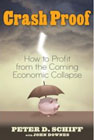
read my new book "Crash Proof: How to Profit from the
Coming Economic Collapse." Click here
to order a copy today.
 More importantly, don't wait for reality
to set in. Protect your wealth and preserve your purchasing power
before it's too late. Discover the best way to buy gold at www.goldyoucanfold.com, download our free
research report on the powerful case for investing in foreign
equities available at www.researchreportone.com, and subscribe to
our free, on-line investment
newsletter. More importantly, don't wait for reality
to set in. Protect your wealth and preserve your purchasing power
before it's too late. Discover the best way to buy gold at www.goldyoucanfold.com, download our free
research report on the powerful case for investing in foreign
equities available at www.researchreportone.com, and subscribe to
our free, on-line investment
newsletter.
John Browne
Senior
Market Strategist
Euro Pacific Capital, Inc.
1 800-727-7922
email: jbrowne@europac.net
website:
www.europac.net
 John
Browne is the Senior Market Strategist for Euro Pacific Capital,
Inc. Mr. Browne is a distinguished former member of Britain's
Parliament who served on the Treasury Select Committee, as Chairman
of the Conservative Small Business Committee, and as a close associate
of then-Prime Minister Margaret Thatcher. Among his many notable
assignments, John served as a principal advisor to Mrs. Thatcher's
government on issues related to the Soviet Union, and was the
first to convince Thatcher of the growing stature of then Agriculture
Minister Mikhail Gorbachev. As a partial result of Browne's advocacy,
Thatcher famously pronounced that Gorbachev was a man the West
"could do business with." A graduate of the Royal Military
Academy Sandhurst, Britain's version of West Point and retired
British army major, John served as a pilot, parachutist, and communications
specialist in the elite Grenadiers of the Royal Guard. John
Browne is the Senior Market Strategist for Euro Pacific Capital,
Inc. Mr. Browne is a distinguished former member of Britain's
Parliament who served on the Treasury Select Committee, as Chairman
of the Conservative Small Business Committee, and as a close associate
of then-Prime Minister Margaret Thatcher. Among his many notable
assignments, John served as a principal advisor to Mrs. Thatcher's
government on issues related to the Soviet Union, and was the
first to convince Thatcher of the growing stature of then Agriculture
Minister Mikhail Gorbachev. As a partial result of Browne's advocacy,
Thatcher famously pronounced that Gorbachev was a man the West
"could do business with." A graduate of the Royal Military
Academy Sandhurst, Britain's version of West Point and retired
British army major, John served as a pilot, parachutist, and communications
specialist in the elite Grenadiers of the Royal Guard.
In addition to careers in British politics and the military, John
has a significant background, spanning some 37 years, in finance
and business. After graduating from the Harvard Business School,
John joined the New York firm of Morgan Stanley & Co as an
investment banker. He has also worked with such firms as Barclays
Bank and Citigroup. During his career he has served on the boards
of numerous banks and international corporations, with a special
interest in venture capital. He is a frequent guest on CNBC's
Kudlow & Co. and the former editor of NewsMax Media's Financial
Intelligence Report and Moneynews.com. He holds FINRA series 7
& 63 licenses.
321gold Ltd

|