|
|||
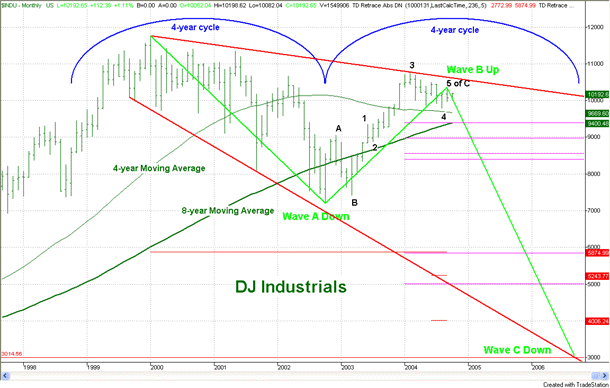
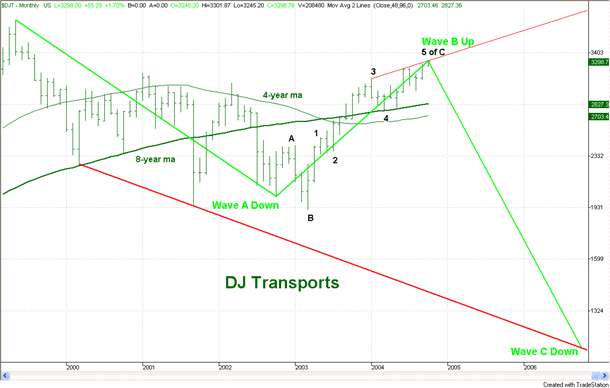
The Big PictureDon Delavan The green waves shown below are primary degree, multi-month Elliott waves. The green waves are divided into black intermediate degree, multi-week waves. In my newsletters, the black waves are subdivided into red minor degree, multi-day waves. DJ Industrials and
Transports Green Wave A down for DJIA started on 1/14/00 and ended on 10/10/02. DJIA fell -4553 points or -38.7% during Wave A down. Since most people track the stock market using DJIA, it has been the most deceptive since DJIA fell the least out of all the major stocks indexes. DJIAís black 5 of C of green Wave B up probably truncated below its black 3 of C while DJTís black 5 of C made a new high. Itís interesting how DJT peaked in May 1999, about 7+ months before DJIA peaked in January 2000, and now DJT has peaked in October 2004, about 7+ months after DJIA peaked in February 2004. Some amazing symmetry! However, now green Wave C down should start at the recent highs and last for about the same amount of time as Wave B up lasted. Wave C down is known for its relentlessly falling prices, and the charts are showing DJIA dropping to around 3000-3200 and DJT to around the 1100s by the fall of 2006 with the bottom of the current 4-year cycle. So the coming October decline will be just black wave 1 of green Wave C down.
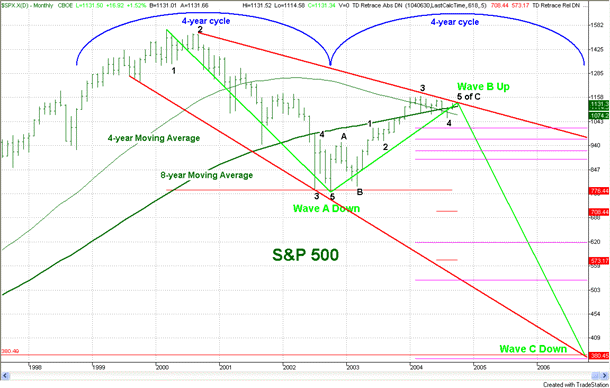
S&P500 But then green Wave C down should start soon and last for about the same amount of time as Wave B up lasted. Wave C down is known for its relentlessly falling prices, and the chart is showing SPX dropping to around 380-400 by the fall of 2006 with the bottom of the current 4-year cycle. Thus, the magnitude of Wave C might be the same magnitude of its Wave A down. So the next decline will be just black wave 1 of green Wave C down. The 1998-2002 4-year cycle was bearish because it ended lower than it started. Since its 4-year moving average is still pointing down and is acting as resistance, the current 4-year cycle is still bearish. Its 4-year moving average has crossed below its 8-year moving average, which is a very bearish sign for the remainder of this 4-year cycle. The last time that a similar crossover occurred after a multi-year bull market was in 1971, and that bear market continued until 1982. The 8-year moving average will probably turn down later this year.
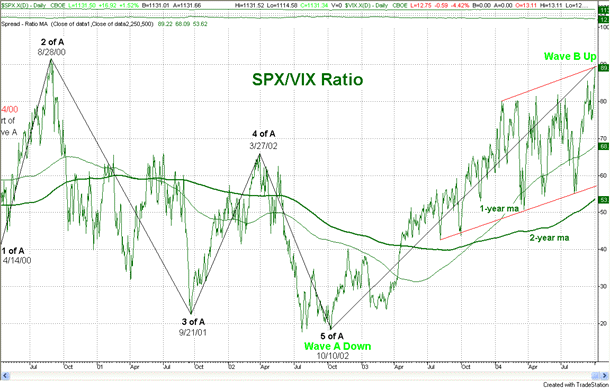
The wave count becomes more obvious when you look at the following chart of the SPX/VIX ratio. Because VIX usually moves opposite of SPX, this ratio amplifies the top and bottoms of waves. This ratio is just 2 points below its previous high in late August 2000 just before SPX fell in half in 23 months. The last several months have been similar to the summer 2000 when SPX was making lower highs while VIX was making lower lows, causing these ratios to rise, i.e., higher complacency without higher prices. Whatís amazing is that SPX closed today -25.6% below its 9/1/00 close when this ratio last peaked, and VIX closed today -27.7% lower than on 9/1/00. In other words, investor complacency is about 27% higher now than on 9/1/00 just before SPX fell in half in 23 months, even though price does not confirm this high level of complacency!
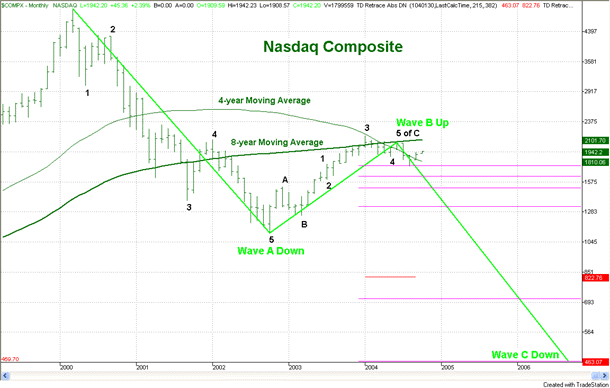
Nasdaq Wave C down is known for its relentlessly falling prices, and the chart is showing COMPX dropping to around 460-470 by the fall of 2006 with the bottom of the current 4-year cycle. Thus, the percent decline of Wave C might be the same percent decline as its Wave A down, which was -78.4%. So the next decline will be just black wave 1 of green Wave C down.
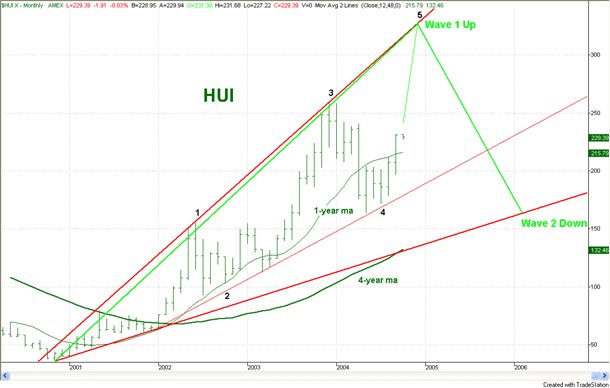
Gold Bugs Index Some have labeled green Wave 1 up as ending in December 2003, but I have not because of the previous highs of XAU and NEM. I cannot reason why a primary multi-month Wave 1 up would end significantly below the all-time highs for XAU and NEM, which are 157 and 60.75. In early 1996, XAU and NEM had 5 consecutive months with highs between 149.10-155.60 and 60.0-60.75. So these are major resistance levels that will probably stop green Wave 1 up later this year. Since HUI started in 1997, HUI does not have any 1996 history, but it should peak around 300-330 in December. If this is the correct wave count, then the bad news is that green Wave 2 down will last for more than 12 months and decline to around HUI 160 until it finds support from its 4-year moving average. Thus, gold stocks may be a poor investment for all of 2005 along with the rest of the stock market. But whenever green Wave 2 down is complete, green Wave 3 up will be the best news. Since green Wave 1 up will be around a 900% rise, then who knows how high green Wave 3 up will rise - maybe HUI 1500?
Don Delavan |